Table of contents
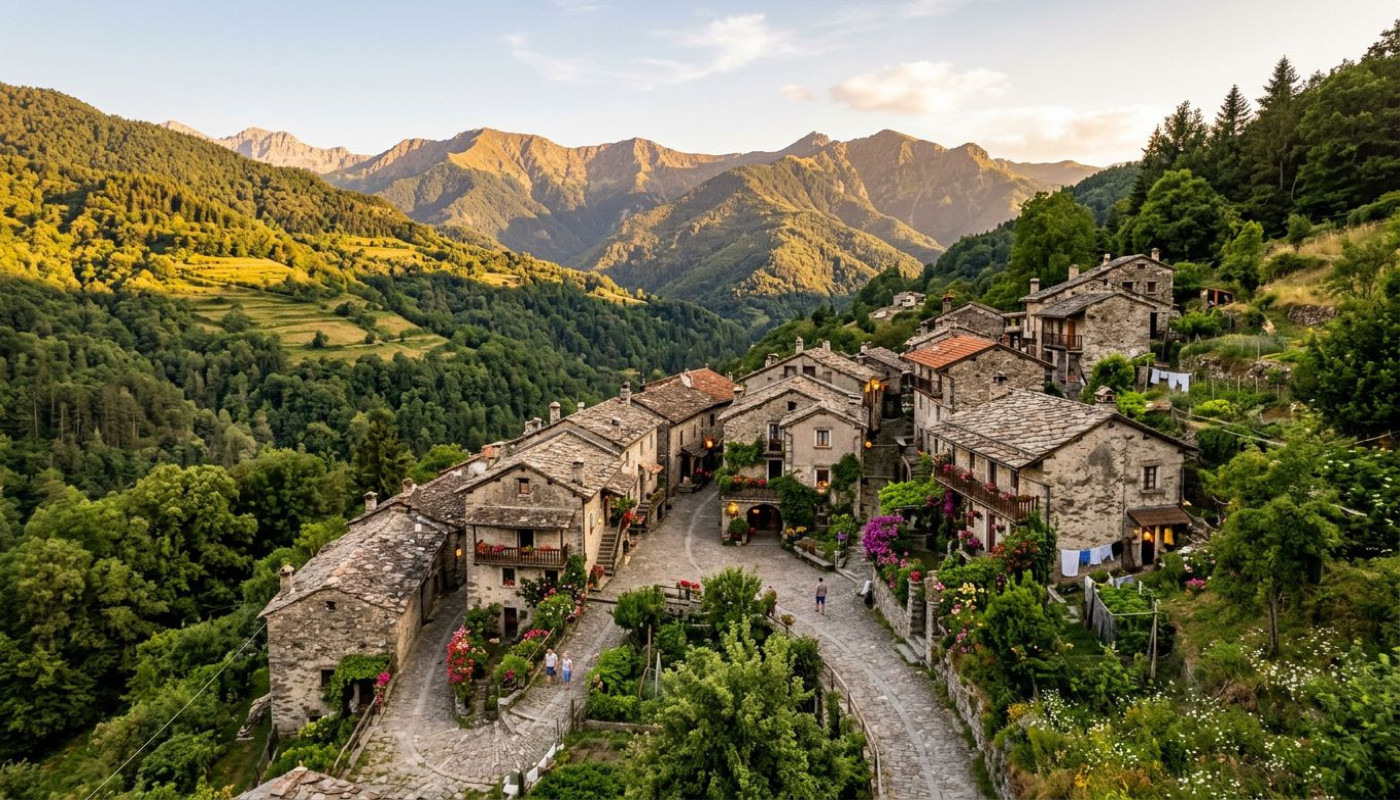
Overcrowded capitals and checklist tourism still dominate bookings in 2026, yet a quieter countertrend is reshaping how people plan trips: weaving “hidden villages” into routes that feel personal, slower, and more surprising. From Spain’s interior to Austria’s wine country, these small places are no longer just scenic detours, they are itinerary anchors that change pacing, budgets, and even transport choices. The result is a travel plan that reads less like a map and more like a story, with fewer queues and more encounters that linger.
Small villages, big effect on pacing
What changes first when a village enters the plan? Time stops behaving like a spreadsheet. In a city-heavy itinerary, the day often breaks into timed slots, museum windows, reservation grids, and commuting buffers that eat into spontaneity, whereas adding a village typically forces a different rhythm, with fewer “must-sees” and more open hours that naturally stretch into long lunches, market mornings, and walks that have no endpoint. That shift is not just romantic; it is structural, because it alters how many nights you need in each place, how early you must depart, and how much you rely on pre-booked tickets.
Data points underline why this feels so different. Across Europe, accommodation supply is still concentrated in major urban hubs, and overtourism pressure remains measurable: in 2024, Dubrovnik, Venice, and Santorini all continued to feature in widely cited capacity and visitor-density discussions among European tourism bodies, while several capitals faced renewed debates about short-term rentals and crowd management. In practical terms, crowded destinations push travelers toward early starts and advance planning, whereas small villages often reward late decisions, with local cafés and family-run inns that do not operate on the same high-demand clock. Add one village stay between two cities and the itinerary typically gains a “soft day,” a buffer that absorbs delays and reduces the fatigue that comes from constant packing, station transfers, and rigid sightseeing loops.
That pacing effect is also measurable through mobility choices. Travelers who insert rural stops more often choose a car for at least part of the route, not necessarily to drive long distances, but to unlock short hops between hamlets, viewpoints, wineries, and trailheads. Yet the most successful itineraries avoid turning villages into a driving marathon; they place them strategically, within an hour or two of a rail corridor or a mid-route city, so the rural segment becomes a decompression chamber rather than a logistical hurdle. Done well, the village becomes the trip’s breathing space, and surprisingly, it can make the surrounding cities more enjoyable because you arrive rested, not depleted.
Where “hidden” becomes a real experience
Everyone wants authenticity, but what does that actually mean on the ground? A village feels “hidden” when daily life is still the main event, and tourism is a guest rather than the engine, which is why timing matters as much as geography. A place can be twenty minutes from a famous landmark and still feel undiscovered if day-trippers leave by late afternoon, or if the village’s economy remains tied to agriculture, crafts, and local services. This is the difference between a photogenic stop and a place that reshapes your trip: the first gives you content, the second gives you context.
One reason these villages imprint so strongly is that they concentrate local culture into small spaces. Markets, parish festivals, vineyard work, and workshop traditions are more visible because there is less background noise, and a traveler can follow the thread of a community’s rhythm in a single day. In parts of Central Europe, for example, wine villages link tasting rooms, cellar lanes, and seasonal “heuriger”-style dining into a social circuit that is difficult to replicate in a capital, where dining is more anonymous and entertainment more fragmented. The same logic applies to mountain villages where hiking routes begin at the doorstep, and weather dictates the day’s plan more than any guidebook.
The “hidden” label, however, is fragile, and responsible planning matters. When a village suddenly appears on viral lists, pressure can rise quickly, particularly for parking, waste management, and housing. Travelers can reduce impact by choosing shoulder seasons, staying overnight rather than doing a high-churn visit, and spending locally on services that sustain residents year-round. In this sense, a village stop is not a trophy; it is a relationship, brief but real, that works best when the itinerary is built to respect the place’s scale.
The itinerary math: transport, costs, nights
Is a village detour always more expensive? Not necessarily, and the numbers often surprise. Major-city travel routinely comes with higher per-night accommodation costs, add-on fees for attractions, and the quiet drain of “convenience spending” on taxis, surge-priced rides, and quick meals. Villages can flip that equation: lodging may be cheaper, meals can be more generous for the price, and the day’s main activity might be free, a hike, a swim, a bike ride, a vineyard walk. The trade-off is transport, because the rural leg can introduce car rental costs or paid transfers, yet those costs can be shared across a couple or a group, and they sometimes replace multiple urban expenses rather than adding to them.
Budget planning also benefits from the way villages concentrate experiences. In a city, you might stack several paid sites in a day, while in a village, one or two anchor moments often carry the whole stay, a long lunch, a tasting, a scenic trail, a craft visit. This changes the cost curve, smoothing the peaks of “big ticket” days and creating more predictable spending. It also influences the optimal number of nights: a single night can feel rushed if arrival and departure swallow the daylight, whereas two nights frequently deliver the best value, with one full day that is not interrupted by travel and one evening that allows you to experience the place after day visitors have gone.
Transport choices deserve sober attention, because a hidden village can be either liberating or limiting. If the village is connected by regional rail or bus, the trip can remain low-stress and lower-carbon, but schedules may be sparse, especially on Sundays or outside peak season. If you drive, you gain flexibility, yet you must factor in parking constraints, wine tasting safety, and the reality that narrow historic streets were not built for modern traffic. A practical approach is the “hybrid” itinerary: rail between cities, then a short rental for the village segment, returning the car before the final urban stay. For travelers planning an Austrian route that blends the capital with wine-country villages and countryside stops, local operators and itinerary specialists can help with logistics and pacing; resources such as https://www.vienna-spirit.com/ are often used by travelers looking for curated experiences and locally grounded planning.
How to find villages worth your time
How do you avoid the pretty-but-empty stop? The strongest villages for itineraries share a few signals: a functioning year-round community, at least one meaningful local activity, and a setting that encourages staying rather than snapping a photo and leaving. Look for places with a weekly market, a cluster of independent food producers, a cultural calendar that is not solely designed for visitors, or access to trails, lakes, or viewpoints that locals actually use. These indicators suggest you will have something to do beyond the postcard angle, and they often correlate with better food, warmer hosting, and more memorable conversations.
Digital tools help, but the best research remains oddly analog. Regional newspapers, municipal event calendars, and small museum notices often reveal what a place values, and that is where itinerary inspiration becomes specific, a harvest festival, a transhumance event, a craft fair, a spring wine opening. Even map behavior can be revealing: villages with multiple everyday amenities, a bakery, a pharmacy, a school, are more likely to feel alive, and they also tend to be easier for travelers because services are nearby. Reviews should be read carefully; in small places, a handful of comments can skew perception, and what one visitor calls “quiet” might mean “closed on Monday.”
Finally, the village must fit the story of your route. A hidden place works best when it is not forced into the trip as a moral badge of “off the beaten path,” but because it connects two larger stops, provides a thematic bridge, wine between city and mountains, crafts between coast and interior, or simply a rest point between long travel days. When the village aligns with your interests and sits naturally in the geography, it stops being a detour and becomes the chapter you remember, the place where the trip suddenly feels like yours.
Booking the village chapter wisely
Reserve earlier than you think for small inns, especially on weekends and during local festivals, and budget for transport as a line item, not an afterthought. If you are traveling in Europe, check whether regional passes, rail discounts, or local mobility cards apply, and in some areas, ask about municipal visitor taxes and parking rules before arrival.
Similar

Packing Light, Traveling Smart: Underrated Tools Every Explorer Should Use

Is Spontaneity The Best Tool For Discovering New Activities?

Are Spontaneous Excursions The Secret To Authentic Experiences?
Unexpected Connections: Destinations That Inspire Curious Explorers

Beyond The Bucket List: Crafting A Personal Circuit With Local Gems

Unpacking The Invisible: Overlooked Tips Every Itinerary Should Include
